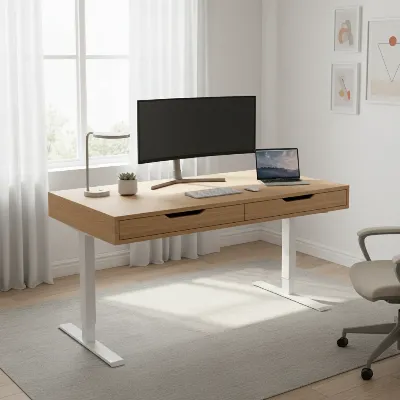
In today’s dynamic work environment, the standing desk has become a cornerstone of healthier and more productive living. Yet, beyond the adjustable frame, the desktop material itself plays a pivotal role in your daily experience, influencing everything from aesthetics and durability to your budget and environmental footprint. Two popular contenders often emerge when selecting a standing desk surface: natural bamboo and versatile laminate. Both offer distinct advantages, making the choice a personal journey toward the perfect workstation. This guide will delve into the characteristics of each, helping you navigate their strengths and weaknesses to find the ideal desktop for your needs.
Understanding Standing Desk Materials: Bamboo and Laminate
Before comparing them, it’s essential to grasp what each material entails. Bamboo desktops are crafted from strips of this rapidly growing grass, which are then kiln-dried, laminated together, and finished to create a strong, coherent surface. This process retains bamboo’s natural beauty and unique grain patterns. Laminate desktops, on the other hand, are engineered products. They typically consist of a core layer, such as medium-density fiberboard (MDF) or particleboard, over which a decorative paper layer with a printed design (mimicking wood, stone, or solid colors) is bonded, and then sealed with a tough, transparent protective finish.
Bamboo Standing Desks: The Eco-Friendly Aesthetic
Bamboo has gained significant traction as a premium, sustainable choice for standing desk tops, celebrated for its natural elegance and robust characteristics.
Advantages of Bamboo Desktops
|
Our Picks for the Best Standing Desk in 2026
As an Amazon Associate I earn from qualifying purchases.
|
||
| Num | Product | Action |
|---|---|---|
| 1 | Huuger 55 x 28 Large Electric Standing Desk, Height Adjustable Computer Desk, 27.6" Deep Desktop, Stand up Gaming Office Desk with 2 Hooks, 3 Preset Heights, for Home Office, Rustic Brown |

|
| 2 | HUANUO 32" Small Electric Standing Desk Adjustable Height, 4 Memory Height Settings, Sit Stand Up Desk for Home Office & Computer Workstation, Black and Gold Frame |
|
| 3 | HUANUO 32" Small Electric Standing Desk Adjustable Height, 4 Memory Height Settings, Sit Stand Up Desk for Home Office & Computer Workstation, Vintage Brown |
|
| 4 | HUANUO 32" Small Electric Standing Desk Adjustable Height, 4 Memory Height Settings, Sit Stand Up Desk for Home Office & Computer Workstation, Black Walnut |
|
| 5 | Huuger 55 x 28 Large Electric Standing Desk, Height Adjustable Computer Desk, 27.6" Deep Desktop, Stand up Gaming Office Table with 2 Hooks, 3 Preset Heights, for Home Office, Black |
|
| 6 | Huuger 55 x 28 Large Electric Standing Desk, Height Adjustable Desk, 27.6" Deep Desktop, Stand up Gaming Computer Office Desk with 2 Hooks, 3 Preset Heights, for Home Office, Grey |
|
| 7 | HUANUO 32" Small Electric Standing Desk Adjustable Height, 4 Memory Height Settings, Sit Stand Up Desk for Home Office & Computer Workstation, Black |
|
| 8 | Huuger 55 x 28 Large Electric Standing Desk, Height Adjustable Copmuter Desk, 27.6" Deep Desktop, Stand up Gaming Office Table with 2 Hooks, 3 Preset Heights, for Home Office, White |
|
| 9 | HUANUO 32" Small Electric Standing Desk Adjustable Height, 4 Memory Height Settings, Sit Stand Up Desk for Home Office & Computer Workstation, Sage Green |
|
| 10 | HUANUO 32" Small Electric Standing Desk Adjustable Height, 4 Memory Height Settings, Sit Stand Up Desk for Home Office & Computer Workstation, LightWalnut |
|
Bamboo’s appeal lies in a blend of environmental responsibility and functional performance. It is renowned for its exceptional sustainability, as bamboo is technically a fast-growing grass that can mature and regenerate from its roots in just a few years, making it a highly renewable resource with a low environmental impact compared to slow-growing hardwoods. Aesthetically, bamboo desktops offer a beautiful, natural look with a distinct modern grain pattern, often boasting a warm, honey-toned color that can brighten any workspace.
Beyond its eco-credentials and looks, bamboo offers impressive durability and strength. High-quality, carbonized bamboo can be exceptionally hard and dense, rivaling or even exceeding the hardness of some traditional hardwoods like oak, making it highly resistant to dents and scratches. This material also exhibits excellent dimensional stability, meaning it is less prone to warping or cracking due to changes in temperature and humidity, ensuring a smooth, flat surface over time. Furthermore, bamboo is naturally resistant to pests and fungi, contributing to its long-lasting quality. Maintaining a bamboo desk is straightforward, as it is less susceptible to water damage, naturally resistant to termites, and easily cleaned with a damp cloth. Lastly, bamboo desks are typically lighter than solid wood counterparts, offering greater portability and ease of adjustment, which is a significant benefit for adjustable standing desks.
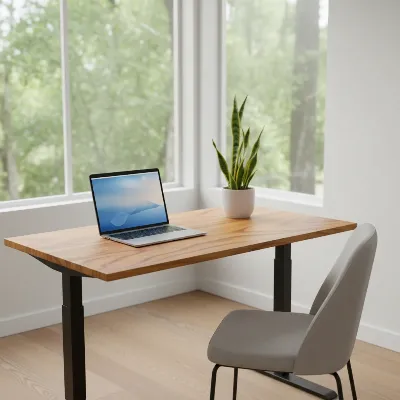 A bright, modern home office with a bamboo standing desk, showcasing its warm, natural grain and minimalist aesthetic under soft window light.
Disadvantages of Bamboo Desktops
While bamboo boasts many benefits, it also comes with a few considerations. Being a natural product, bamboo desktops can exhibit slight variations in color and grain, which some users might perceive as a con if they prefer absolute uniformity. From a cost perspective, bamboo is generally positioned as a mid-range to premium option, meaning it typically costs more than laminate. While high-quality strand-woven bamboo is very hard, some bamboo processing methods can result in a surface that is softer and potentially more susceptible to dents and scratches compared to high-pressure laminate.
Laminate Standing Desks: The Practical and Versatile Choice
Laminate desktops are a mainstay in offices and homes due to their practicality, versatility, and accessible price point, offering robust performance for daily use.
Advantages of Laminate Desktops
Laminate desks are celebrated for their exceptional value and wide appeal. Their most significant advantage is affordability; laminate desktops typically offer the best value, making them the most budget-friendly choice available. This allows for a durable and stylish workspace without a substantial financial outlay. High-pressure laminate (HPL) surfaces are highly durable, resistant to scratches, stains, and heat, making them an incredibly low-maintenance option that can withstand the rigors of a busy workday. Spills are easily wiped away, and the surface holds up well against daily wear and tear.
The design versatility of laminate is virtually limitless. Because the decorative layer is printed, laminate can come in an endless array of colors and patterns, from solid white or black to realistic wood grain, stone, or metallic finishes, allowing it to seamlessly match any office decor. Furthermore, laminate is manufactured with uniform density and thickness, offering predictable performance and high stability in varying environments. Unlike solid wood, laminate is less susceptible to warping, cracking, or expanding due to changes in temperature and humidity. For environmentally conscious consumers, GREENGUARD certified laminate options are available, utilizing eco-friendly materials and adhering to environmental standards.
Disadvantages of Laminate Desktops
Despite its many benefits, laminate also has drawbacks. It is an engineered product, not a “natural” material like bamboo or solid wood, which can be a drawback for those who prioritize organic aesthetics and feel. While very tough, deep scratches or chips in laminate can be challenging to repair seamlessly, often resulting in permanent damage if the protective top layer is compromised. Another consideration is heat sensitivity; laminate can be prone to damage from prolonged exposure to high temperatures, potentially causing warping or discoloration if not properly monitored, though modern office environments with climate control often mitigate this. Lastly, if the laminate seal is broken, the inner core material can swell and degrade, and lower-quality laminate can sometimes experience edge banding peeling over time.
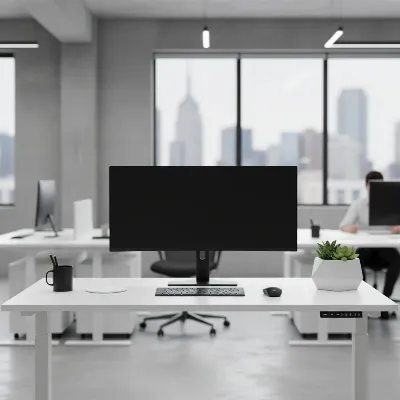 A sleek, minimalist office featuring a laminate standing desk with a clean white finish, alongside a monitor and modern accessories.
Bamboo vs. Laminate: A Direct Comparison
Choosing between bamboo and laminate often comes down to balancing personal priorities against their inherent characteristics. Here’s a quick comparison:
| Feature | Bamboo Standing Desks | Laminate Standing Desks |
|---|---|---|
| Material Type | Natural, fast-growing grass, laminated strips | Engineered, decorative layer over composite wood (MDF/particleboard) |
| Aesthetics | Natural, modern, unique grain, warm tones | Wide variety (solid colors, wood grains, stone), consistent |
| Durability | Very durable, hard (especially strand-woven), resistant to warping/pests/moisture | Highly resistant to scratches, stains, heat (HPL), consistent, stable in varied environments |
| Repairability | Difficult to repair deep damage; minor blemishes can be less noticeable due to natural patterns | Difficult to repair deep scratches/chips; often permanent |
| Cost | Mid-range to premium, generally more than laminate | Most affordable, excellent value |
| Sustainability | Highly sustainable, rapidly renewable, eco-friendly | Can be eco-friendly (GREENGUARD certified), made from recycled wood materials |
| Feel | Natural, smooth, warm | Can feel less “natural” or softer; surface protection is key |
| Weight | Lighter than most hardwoods | Varies by core material, but generally lighter than solid wood |
Beyond the Desktop: The Benefits of Using Any Standing Desk
Regardless of your desktop material choice, investing in a standing desk offers a multitude of health and productivity benefits that can transform your workday. The primary advantage is improved health; standing desks help to reduce back pain, improve circulation, and can even contribute to burning more calories throughout the day compared to prolonged sitting. By allowing you to alternate between sitting and standing, these desks encourage movement and reduce sedentary behavior, which is linked to various health issues.
Beyond physical well-being, standing desks are known to elevate productivity. They can help you stay more alert and focused, combating the afternoon slump often associated with continuous sitting. This increased alertness can lead to a reduction in stress and fatigue, fostering a more engaging and energetic work environment. Many users also report enhanced creativity, finding that a change in posture can stimulate new ideas and approaches to their tasks.
> “Transitioning between sitting and standing throughout the workday can significantly mitigate the negative health effects of prolonged sitting, contributing to both physical well-being and improved cognitive function. A well-chosen standing desk is an investment in your long-term health and productivity.” – Dr. Emily R. Chen, Ergonomics Specialist
Choosing the Right Standing Desk for You: A Buying Guide
Making the final decision between a bamboo and laminate standing desk involves a careful assessment of your individual priorities and workspace needs. Begin by identifying your core needs: What is your budget? Do you prioritize a natural aesthetic, or is design versatility more important? Are environmental concerns a significant factor in your purchasing decisions? How much daily wear and tear will your desk endure?
Consider the specific conditions of your workspace. If your office experiences significant humidity or temperature fluctuations, bamboo’s resistance to warping might be a key factor. For a high-traffic, low-maintenance environment like a shared office, laminate’s superior scratch and stain resistance could be paramount. Finally, ensure that your chosen desktop material is paired with a sturdy and reliable desk frame, capable of supporting your equipment and facilitating smooth height adjustments for years to come.
Conclusion
Both bamboo and laminate standing desks offer compelling advantages, making either an excellent choice for a modern workspace. Bamboo stands out for its undeniable eco-friendliness, unique natural beauty, and impressive durability, appealing to those who value sustainability and an organic aesthetic. Laminate, on the other hand, provides unparalleled affordability, a vast array of design options, and exceptional resistance to daily wear, making it a highly practical and versatile option for almost any user.
Ultimately, the “better” material is the one that best aligns with your personal preferences, budget, and the demands of your daily work life. By carefully weighing their characteristics, you can select a Standing Desk top that not only enhances your workspace visually but also contributes to a healthier and more productive you. Which material will you choose to elevate your workday?
Frequently Asked Questions
Is bamboo stronger than laminate for a standing desk?
High-quality, carbonized bamboo can be exceptionally hard and dense, often surpassing the hardness of many traditional woods and offering impressive resistance to dents and scratches. High-pressure laminate (HPL) is also very durable, excelling in resistance to scratches, stains, and heat. The “strength” depends on the specific quality and processing of each material.
Which standing desk material is more eco-friendly?
Bamboo is generally considered more eco-friendly due to its incredibly rapid growth rate and ability to regenerate from its roots without replanting. It is a highly renewable resource. While laminate is an engineered product, many modern laminates are GREENGUARD certified and made from recycled wood materials, offering a more sustainable choice within their category.
Can laminate standing desks mimic a natural wood look?
Yes, laminate desks are highly versatile in design. They can feature printed decorative layers that realistically mimic the appearance of various natural wood grains, stone patterns, or solid colors. High-quality 3D laminates, in particular, can be difficult to distinguish from real wood at a distance.
How do bamboo and laminate standing desks compare in terms of maintenance?
Both bamboo and high-quality laminate are relatively low-maintenance. Bamboo is resistant to water damage, termites, and is easily cleaned with a damp cloth. Laminate is highly resistant to stains and spills, making it simple to wipe clean. The main difference is that deep damage to laminate is often permanent, while bamboo’s natural variations might hide minor imperfections better.
What is the typical lifespan of bamboo vs. laminate standing desk tops?
With proper care, both can last for many years. High-quality bamboo is very durable and resistant to warping, contributing to a long lifespan. The lifespan of a laminate desk is largely dependent on the durability of its top layer; while it offers excellent everyday resistance, if this layer is deeply compromised, repair is difficult, potentially shortening its aesthetic lifespan.