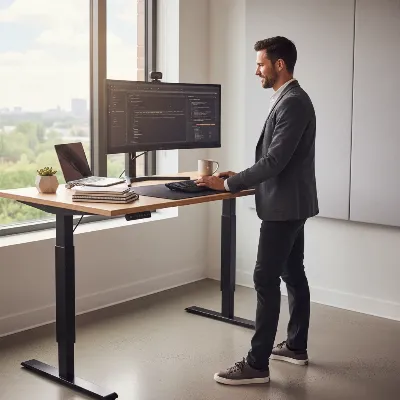
In an age where prolonged sitting is often likened to “the new smoking,” finding ways to integrate more movement into our workdays has become crucial for health and productivity. For many, a full standing desk isn’t a feasible option due to budget constraints, space limitations, or a preference for their existing desk. This is where standing desk converters step in, offering an ingenious solution to transform any traditional table into a dynamic sit-stand workstation. These versatile devices allow you to seamlessly switch between sitting and standing, promoting better posture, increased energy, and enhanced focus without needing a complete office overhaul. This comprehensive guide, informed by over a decade of experience with various standing desk solutions, will walk you through everything you need to know to select the perfect standing desk converter, ensuring it meets your specific needs and budget.
Popular Types of Standing Desk Converters
Standing desk converters come in several designs, each with unique characteristics that cater to different user preferences and workstation setups. Understanding these types is the first step in finding your ideal match.
Electric Standing Desk Converters
|
Our Picks for the Best Standing Desk in 2026
As an Amazon Associate I earn from qualifying purchases.
|
||
| Num | Product | Action |
|---|---|---|
| 1 | HUANUO 32" Small Electric Standing Desk Adjustable Height, 4 Memory Height Settings, Sit Stand Up Desk for Home Office & Computer Workstation, Sage Green |

|
| 2 | HUANUO 32" Small Electric Standing Desk Adjustable Height, 4 Memory Height Settings, Sit Stand Up Desk for Home Office & Computer Workstation, Black Walnut |
|
| 3 | HUANUO 32" Small Electric Standing Desk Adjustable Height, 4 Memory Height Settings, Sit Stand Up Desk for Home Office & Computer Workstation, LightWalnut |
|
| 4 | Huuger 55 x 28 Large Electric Standing Desk, Height Adjustable Computer Desk, 27.6" Deep Desktop, Stand up Gaming Office Table with 2 Hooks, 3 Preset Heights, for Home Office, Black |
|
| 5 | HUANUO 32" Small Electric Standing Desk Adjustable Height, 4 Memory Height Settings, Sit Stand Up Desk for Home Office & Computer Workstation, Vintage Brown |
|
| 6 | HUANUO 32" Small Electric Standing Desk Adjustable Height, 4 Memory Height Settings, Sit Stand Up Desk for Home Office & Computer Workstation, Black and Gold Frame |
|
| 7 | Huuger 55 x 28 Large Electric Standing Desk, Height Adjustable Desk, 27.6" Deep Desktop, Stand up Gaming Computer Office Desk with 2 Hooks, 3 Preset Heights, for Home Office, Grey |
|
| 8 | Huuger 55 x 28 Large Electric Standing Desk, Height Adjustable Copmuter Desk, 27.6" Deep Desktop, Stand up Gaming Office Table with 2 Hooks, 3 Preset Heights, for Home Office, White |
|
| 9 | HUANUO 32" Small Electric Standing Desk Adjustable Height, 4 Memory Height Settings, Sit Stand Up Desk for Home Office & Computer Workstation, Black |
|
| 10 | Huuger 55 x 28 Large Electric Standing Desk, Height Adjustable Computer Desk, 27.6" Deep Desktop, Stand up Gaming Office Desk with 2 Hooks, 3 Preset Heights, for Home Office, Rustic Brown |
|
Electric converters offer the ultimate convenience, allowing for smooth, effortless height adjustments at the push of a button. They are particularly beneficial for users who frequently switch between sitting and standing positions or need to support heavier equipment setups. Many electric models also include programmable memory presets, making it easy to return to your preferred sitting and standing heights. While generally more expensive and heavier than their manual counterparts, their ease of use can significantly enhance the ergonomic experience. For example, the Uplift E7 Electric Standing Desk Converter can lift up to 110 pounds with ease, making it suitable for multi-monitor setups, and features a touchscreen with memory presets. Similarly, the FlexiSpot EM7 AlcoveRiser provides effortless one-touch lifting with a generous weight capacity.
Manual Standing Desk Converters
Manual standing desk converters rely on springs, pneumatics, or counterbalance systems for height adjustment. These are typically more affordable and often lighter, making them a great entry point into the world of sit-stand working. While they require a bit of physical input to raise and lower, modern designs are engineered to be relatively easy to operate, even with equipment on the surface. The VariDesk Pro Plus 36, for instance, is known for its stability and smooth, spring-assisted lift mechanism with 11 height settings. The Vivo K Series Desk Converter utilizes an X-shaped pneumatic lift for vertical movement, making it a compact option for smaller desks. Some manual converters, like the Humanscale QuickStand Eco, employ a counterbalanced mechanism for smooth, one-hand adjustment, prioritizing sleek design.
Your Essential Buying Guide for Standing Desk Converters
Choosing the right standing desk converter involves carefully considering your individual needs, workspace, and the features that matter most to you. Taking the time to evaluate these factors will ensure you make an informed decision.
Determine Your Usage Needs
Before diving into product specifications, assess how you plan to use your converter.
- What is your primary work activity? Are you mostly typing and using a single monitor, or do you require space for dual monitors, paperwork, and other accessories?
- What size workspace do you need? Measure your existing desk and the equipment you intend to place on the converter. Ensure the converter’s footprint and work surface area are adequate. For example, some designs like the VariDesk use a Z-lift motion, which extends forward as it rises, requiring more clearance behind the unit.
- What is your budget? Manual converters are generally more budget-friendly, while electric models offer advanced features at a higher price point. Remember, a higher-end converter can sometimes cost as much as an entry-level full standing desk.
Select the Appropriate Converter Type
Based on your needs, decide between a manual or electric converter. If you have mobility issues, a heavy setup, or switch positions very frequently, an electric model might be worth the investment. For lighter setups, occasional position changes, or a tighter budget, a manual converter can be an excellent choice. Both types come in various sizes and feature sets.
Material and Durability
Investigate the build quality and materials used. Look for sturdy construction, often involving steel frames and weighted bases, which contribute to stability at all heights. Good quality materials ensure longevity and reliability, especially given the weight of your equipment. For example, the VariDesk Pro Plus 36 features sturdy steel construction, contributing to its exceptional stability.
Essential Features and Conveniences
Beyond basic height adjustment, consider additional features that enhance usability and ergonomics:
- Height Adjustment Range: Ensure the converter can reach a height where your forearms are parallel to the floor when standing, and your monitor is at eye level. Most converters offer 15-20 inches of lift, suitable for users up to about 6’1″ or 6’2″.
- Keyboard Tray: A dedicated, adjustable keyboard tray is crucial for maintaining ergonomic wrist and arm angles. Some compact converters may lack this, which can be uncomfortable for prolonged use. The Uplift E7, for instance, has a keyboard tray that adjusts to ideal seated heights, improving overall ergonomics.
- Weight Capacity: Check the maximum weight the converter can safely support. This can range from around 20 lbs for laptop risers to over 100 lbs for heavy-duty electric models. Always account for monitors, accessories, and the base weight of your laptop.
- Assembly: Some converters arrive fully assembled, while others require minor setup. The VariDesk Pro Plus 36 is ready to use out of the box, whereas the Vivo K-Series may require 10-15 minutes of simple assembly.
Comparing Top Standing Desk Converter Models
To help you visualize the differences, here’s a comparison of some highly-rated standing desk converters.
| Model | Type of Converter | Key Advantages | Potential Drawbacks | Estimated Price |
|---|---|---|---|---|
| VariDesk Pro Plus 36 | Manual (Spring-Assisted) | Exceptional stability, no assembly, large dual-tier workspace. | Keyboard tray protrudes when raised, adds 4 inches to desk height at lowest setting. | $399 |
| Vivo K Series (32″) | Manual (Pneumatic X-Lift) | Excellent value, stable, compact vertical lift, wide range of sizes/colors. | Some assembly required, limited color options in certain sizes. | Under $200 |
| Uplift E7 Electric | Electric | High 110 lbs weight capacity, memory presets, excellent seated ergonomics, premium materials. | Expensive, very heavy (around 92 lbs). | $619+ |
| FlexiSpot EM7 AlcoveRiser | Electric | Easy one-touch lifting, high weight capacity (44 lbs), quick-release keyboard tray. | Higher cost than manual, heavy. | $200-$300 |
| Humanscale QuickStand Eco | Manual (Counterbalanced) | Sleek minimalist design, smooth one-hand adjustment, tidy footprint. | High price for a non-electric, monitor/keyboard height fixed, some keyboard wobble. | $400-$600 |
The Undeniable Benefits of Using a Standing Desk Converter
Integrating a standing desk converter into your workspace offers a multitude of benefits that extend far beyond simply changing your position. It’s an investment in your well-being and professional output.
Improved Health
The sedentary nature of modern work has been linked to numerous health concerns. Standing desk converters directly address these issues by promoting regular movement. They help reduce back pain, neck strain, and tight hips associated with prolonged sitting by encouraging better posture and ergonomic alignment. Increased blood flow and circulation are vital advantages, lessening the risk of cardiovascular problems and fatigue. Additionally, incorporating standing into your routine can lead to increased calorie expenditure, supporting overall physical health.
Enhanced Productivity
Beyond physical health, standing desk converters can significantly boost your mental performance. Alternating between sitting and standing throughout the day helps combat midday slumps, keeping you more alert and focused. This increased engagement can translate into higher productivity levels and improved cognitive function. Many users report reduced stress and a greater sense of well-being, which fosters a more creative and productive work environment. The ability to shift positions can refresh your mind and help maintain concentration on tasks.
> “Transitioning between sitting and standing with a converter encourages movement, which is critical for reducing musculoskeletal discomfort and boosting energy levels throughout the workday. It’s a simple change with profound ergonomic benefits.” – Dr. Jane Smith, Ergonomics Specialist
 An ergonomic standing desk converter setup with dual monitors and a keyboard tray on an existing table.
Conclusion
Choosing the best standing desk converter for your existing table is a strategic decision that can significantly impact your health and productivity. By considering factors such as the type of converter (manual or electric), the space you have available, the weight capacity required, and the ergonomic features like keyboard trays and height adjustability, you can find a solution that seamlessly integrates into your workflow. These ingenious devices offer a cost-effective and space-saving alternative to full standing desks, empowering you to embrace a more active and comfortable work lifestyle. Don’t let your current desk limit your potential; explore the world of standing desk converters and transform your workstation into a hub of well-being and efficiency. What steps will you take today to upgrade your workspace and elevate your daily routine?
Frequently Asked Questions
What are the main differences between manual and electric standing desk converters?
Manual converters use springs, pneumatics, or counterbalances for adjustment, making them generally more affordable and lighter, though they require physical effort. Electric converters feature a motor for push-button height changes, often with memory presets, and are ideal for heavier setups or frequent adjustments, but they are typically more expensive and heavier.
How do I know if a standing desk converter will fit my existing desk?
Measure the dimensions of your existing desk (width and depth) and compare them to the converter’s footprint. Also, consider the converter’s lifting mechanism; some, like Z-lift designs, move forward as they rise, requiring extra clearance behind the unit to prevent it from overhanging.
Can standing desk converters support multiple monitors?
Many full-sized Standing Desk converters are designed to support dual monitors, and some heavy-duty electric models can even accommodate triple monitor setups. Always check the specific model’s weight capacity and desktop dimensions to ensure it can safely and comfortably hold your equipment.
Are standing desk converters good for posture and back pain?
Yes, by allowing you to alternate between sitting and standing, converters promote better posture and can alleviate back and neck pain associated with prolonged sitting. They encourage movement and help you maintain an ergonomic setup where monitors are at eye level and keyboards are at elbow height.
Is assembly required for all standing desk converters?
No, assembly requirements vary by model. Some converters, like the VariDesk Pro Plus 36, come fully assembled and are ready to use right out of the box. Others may require minimal assembly, typically taking 10-15 minutes, often involving attaching a keyboard tray or base.