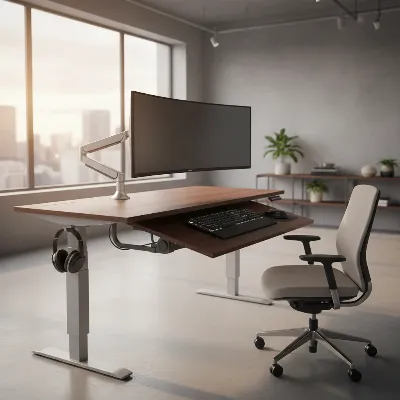
In today’s fast-paced work environment, where health and productivity go hand-in-hand, standing desks have emerged as a vital tool for many professionals. Among the myriad of options available, glass top standing desks offer a distinct blend of contemporary aesthetics and functional design. These sleek workstations are rapidly gaining popularity for their ability to transform any office into a more open, sophisticated, and motivating space. But beyond their striking appearance, how do glass standing desks truly perform? This comprehensive guide will explore the unique advantages and potential drawbacks of glass top standing desks, provide a detailed buying guide, review top features, and offer insights to help you decide if this modern marvel is the right fit for your ergonomic needs and style preferences.
Popular Types of Standing Desks with Glass Tops
While standing desks come in various forms, glass tops are most commonly found integrated into electric adjustable models. The inherent characteristics of glass make it less suitable for manual crank mechanisms or lightweight converters, where durability and ease of adjustment might be compromised.
Electric Glass Top Standing Desks
|
Our Picks for the Best Standing Desk in 2026
As an Amazon Associate I earn from qualifying purchases.
|
||
| Num | Product | Action |
|---|---|---|
| 1 | HUANUO 32" Small Electric Standing Desk Adjustable Height, 4 Memory Height Settings, Sit Stand Up Desk for Home Office & Computer Workstation, Sage Green |

|
| 2 | HUANUO 32" Small Electric Standing Desk Adjustable Height, 4 Memory Height Settings, Sit Stand Up Desk for Home Office & Computer Workstation, Black and Gold Frame |
|
| 3 | Huuger 55 x 28 Large Electric Standing Desk, Height Adjustable Computer Desk, 27.6" Deep Desktop, Stand up Gaming Office Desk with 2 Hooks, 3 Preset Heights, for Home Office, Rustic Brown |
|
| 4 | Huuger 55 x 28 Large Electric Standing Desk, Height Adjustable Desk, 27.6" Deep Desktop, Stand up Gaming Computer Office Desk with 2 Hooks, 3 Preset Heights, for Home Office, Grey |
|
| 5 | HUANUO 32" Small Electric Standing Desk Adjustable Height, 4 Memory Height Settings, Sit Stand Up Desk for Home Office & Computer Workstation, Vintage Brown |
|
| 6 | HUANUO 32" Small Electric Standing Desk Adjustable Height, 4 Memory Height Settings, Sit Stand Up Desk for Home Office & Computer Workstation, LightWalnut |
|
| 7 | Huuger 55 x 28 Large Electric Standing Desk, Height Adjustable Copmuter Desk, 27.6" Deep Desktop, Stand up Gaming Office Table with 2 Hooks, 3 Preset Heights, for Home Office, White |
|
| 8 | HUANUO 32" Small Electric Standing Desk Adjustable Height, 4 Memory Height Settings, Sit Stand Up Desk for Home Office & Computer Workstation, Black |
|
| 9 | Huuger 55 x 28 Large Electric Standing Desk, Height Adjustable Computer Desk, 27.6" Deep Desktop, Stand up Gaming Office Table with 2 Hooks, 3 Preset Heights, for Home Office, Black |
|
| 10 | HUANUO 32" Small Electric Standing Desk Adjustable Height, 4 Memory Height Settings, Sit Stand Up Desk for Home Office & Computer Workstation, Black Walnut |
|
Electric glass top standing desks are the most prevalent and popular option. These desks feature motorized legs that allow for effortless height adjustments with the push of a button. Many models include programmable memory presets, enabling users to save their ideal sitting and standing heights for quick transitions throughout the day. The electric mechanism ensures a smooth, quiet operation, making it ideal for both home and professional office settings. Often, these desks come with integrated features such as USB charging ports, wireless charging pads, and discreet drawers, enhancing both functionality and a minimalist aesthetic. The use of tempered glass is paramount for these desks, providing crucial strength and safety for daily use.
Manual Glass Top Standing Desks
While less common, some standing desks with glass tops may utilize a manual crank system for height adjustment. These typically offer a more budget-friendly option and do not require a power source, providing flexibility in placement. However, the manual adjustment can be more cumbersome and time-consuming, potentially disrupting workflow. The weight of a glass top can also make manual adjustment more physically demanding compared to lighter desktop materials. Durability and stability are key considerations, with tempered glass remaining essential.
Tempered Glass: The Foundation of Durability
Regardless of the adjustment mechanism, the type of glass used for the desktop is a critical factor. High-quality glass standing desks almost exclusively feature tempered glass. This material undergoes a special heating and cooling process, making it significantly stronger and more resistant to impact than regular glass. If tempered glass does break, it’s designed to shatter into small, relatively harmless, pebble-like pieces, reducing the risk of injury. This makes tempered glass a preferred choice for office environments where the desk might endure heavy usage.
Comprehensive Buying Guide for Glass Top Standing Desks
Selecting the perfect glass top standing desk involves more than just admiring its sleek design; it requires careful consideration of your specific needs, the desk’s construction, and its integrated features.
1. Define Your Usage Needs
Before diving into options, assess how you plan to use the desk. Will it be for a light laptop setup, or will you be placing heavy equipment like multiple monitors, large PCs, or printers? The intended load directly impacts the required glass thickness and overall frame stability. For heavy-duty use or if the glass top is directly supported by legs, a thickness of 12 to 15mm is recommended. If the glass merely covers an existing wooden surface, a thinner 6mm glass might suffice.
2. Choose the Right Glass Type and Thickness
As highlighted, tempered glass is the gold standard for standing desks due to its enhanced strength and safety properties. Avoid desks with untreated or annealed glass for primary work surfaces. When considering thickness, prioritize durability and safety. Generally, a thickness of 8mm (approximately 3/8 inch) or above is highly recommended for desks that will frequently support heavy items. This ensures stability and resilience for daily use. For a truly luxurious and robust option, fused glass, made by kiln-casting multiple layers into a solid slab, offers superior strength and a unique aesthetic, though it comes at a higher price point.
3. Evaluate Features and Functionality
Modern glass top standing desks often come packed with convenient features:
- Electric vs. Manual: For seamless and quick transitions, an electric desk is superior. Look for models with dual motors for smoother, faster, and often quieter operation compared to single-motor designs.
- Memory Presets: Essential for electric desks, allowing you to save multiple preferred heights (sitting, standing, or for different users).
- Integrated Power & Charging: Many premium models include built-in USB-A and USB-C charging ports, or even wireless charging pads, helping to keep your workspace clutter-free.
- Storage Solutions: Discreet built-in drawers or pencil trays are common and useful for organizing small office supplies without compromising the desk’s clean lines.
- Stability: This is crucial, especially at standing heights. Look for desks with robust steel frames, 3-stage legs (which offer a wider and often more stable height range), and anti-collision sensors for safety. User reviews often provide insights into a desk’s real-world stability.
- Edge Work: While many glass desks have sharp 90-degree edges, some offer rounded or beveled edges for improved comfort, especially if you lean on the desk while typing. [cite: 2, 2 (search result 3)]
4. Consider Aesthetics and Space
Glass desks create an illusion of space, reflecting light and making rooms feel larger and more open. This makes them an excellent choice for smaller offices or those seeking a minimalist design. Consider the frame color (black, white, silver) to match your existing décor. Some glass tops are clear, while others might be frosted or tinted, offering different levels of transparency and privacy.
5. Budget and Warranty
Glass standing desks can range from mid-tier to premium, with higher-end models featuring advanced features and superior build quality often costing between $800 to $1,500. Invest in a desk that offers a solid warranty on both the frame and electronics, as this indicates manufacturer confidence in durability and performance.
Comparison of Popular Glass Top Standing Desk Features
Choosing the right model often comes down to balancing features with your budget. Here’s a comparative look at typical options:
| Model Type | Key Features | Pros | Cons | Price Range (Estimated) |
|---|---|---|---|---|
| Premium Electric Glass | Dual motors, 3-stage legs, memory presets (4+), USB-C/Wireless charging, integrated drawer, anti-collision | Superior stability, fast/quiet adjustment, extensive features, elegant design | Higher price point, heavier | $900 – $1500+ |
| Standard Electric Glass | Single motor, 2-stage legs, memory presets (2-3), USB-A charging, basic drawer | Good value, sleek look, easy adjustment | Slower/noisier lift, limited height range, moderate stability | $600 – $900 |
| Compact Glass | Single motor, 2-stage legs, basic up/down control, minimal features | Space-saving, often more affordable, modern look | Limited features, less stable at height, lowest weight capacity | $400 – $600 |
The Benefits of Using a Glass Top Standing Desk
Beyond their striking appearance, glass top standing desks offer a multitude of advantages that can positively impact both your health and productivity.
Enhance Your Health
Incorporating a standing desk into your daily routine is a well-documented strategy for combating the negative effects of prolonged sitting. A glass top standing desk facilitates these health improvements:
- Reduced Pain: Alternating between sitting and standing can significantly alleviate back, neck, and shoulder pain often associated with static postures.
- Improved Circulation: Standing promotes better blood flow, reducing the risk of circulatory issues and enhancing overall cardiovascular health.
- Increased Energy Levels: Standing helps you stay more alert and less prone to the afternoon slump, preventing fatigue that can set in after hours of sitting.
- Calorie Burn: While not a substitute for exercise, standing burns more calories than sitting, contributing to weight management efforts over time.
Boost Your Productivity and Focus
A dynamic work environment fostered by a standing desk can profoundly impact your cognitive functions and work output. Glass top standing desks, with their clean and modern aesthetic, can further support a focused mindset.
- Greater Alertness: Standing can help you remain more engaged and attentive during tasks, reducing mental fatigue.
- Enhanced Focus: The ability to change positions helps break monotony, preventing distractions and maintaining concentration.
- Creative Boost: Some users report that standing encourages more dynamic thinking and problem-solving, fostering creativity.
- Less Stress: The physical relief provided by standing can reduce overall work-related stress, leading to a more positive and productive mindset.
Aesthetic and Practical Advantages
The unique properties of glass contribute significantly to the desk’s appeal and practicality:
- Sleek and Modern Appearance: Glass desks exude a high-tech, minimalist elegance that instantly elevates any workspace. They fit seamlessly into contemporary decor, adding a touch of sophistication.
- Creates a Sense of Openness: The transparent nature of glass reflects light and minimizes visual clutter, making even small rooms appear more spacious and airy.
- Easy to Clean and Maintain: Unlike porous wood or laminate, glass is non-absorbent, making it resistant to stains and spills. Fingerprints and smudges, though common, can be quickly wiped away with a damp cloth, ensuring a pristine surface. [cite: 1, 4, 3 (search result 3)]
- Doubles as a Dry Erase Board: Many tempered glass surfaces are compatible with dry-erase markers, offering a convenient space for jotting down notes, brainstorming ideas, or creating quick to-do lists without extra whiteboards.
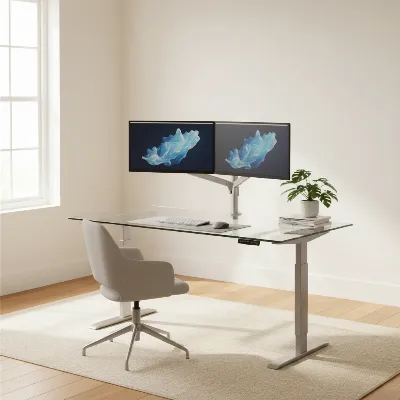 A modern glass top standing desk with dual monitors in a bright, minimalist home office setting, showcasing its sleek design and open feel.
Potential Drawbacks of Glass Top Standing Desks
While glass standing desks offer many benefits, it’s also important to be aware of their potential downsides to make an informed decision.
1. Prone to Fingerprints and Smudges
The most commonly cited drawback of glass desks is their tendency to show every fingerprint, smudge, and dust particle. While easy to clean, this often requires frequent wiping to maintain a spotless appearance, which can be high maintenance for some users.
2. Scratch and Impact Vulnerability
Despite being made from tempered glass, glass surfaces are not entirely immune to scratches. Keys, metal objects, or even rough mouse pads can leave marks over time. Although tempered glass is designed to be stronger, direct, sharp impacts or uneven pressure (such as from C-clamp monitor arms) can still lead to chipping or, in rare cases, shattering.
3. Monitor Arm Compatibility Challenges
Mounting monitor arms with C-clamps directly onto a glass desktop can be risky due to the concentrated pressure they exert. While some users employ protective pads, a safer alternative is to choose desks with built-in monitor arm mounts, or opt for free-standing monitor stands.
4. Acoustic Properties
Glass surfaces can amplify sounds, making the clatter of keyboards, mice, or even a coffee cup more noticeable than on a sound-absorbing wooden desk. This might be a minor annoyance in a quiet home office but could be disruptive in a shared workspace.
5. Temperature and Glare
Glass can feel colder to the touch than wood, which some users might find uncomfortable. Additionally, reflective glass surfaces can sometimes create glare from overhead lights or windows, potentially causing eye strain. Positioning and anti-glare accessories can mitigate this.
6. Weight and Cost
Glass desktops, especially thicker tempered versions, can be significantly heavier than their wooden counterparts, making assembly and relocation more challenging. They also tend to be more expensive than basic laminate or particleboard desks due to the material and specialized manufacturing process.
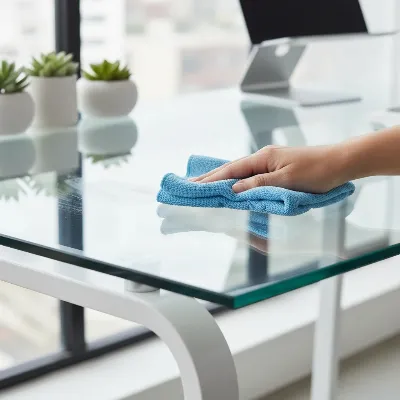 A person wiping a glass top standing desk with a microfiber cloth, showing the ease of cleaning but also hinting at the need for frequent maintenance.
Expert Insight
“The allure of a glass top standing desk lies in its visual lightness and modern appeal, which can truly open up a workspace. However, it’s crucial for users to balance these aesthetic benefits with practical considerations like the need for regular cleaning and potential limitations for certain accessories. Prioritizing tempered glass and a sturdy frame is non-negotiable for both safety and longevity.” – Dr. Emily Chen, Ergonomics Specialist and Workplace Design Consultant
Conclusion
Glass top standing desks offer a compelling combination of sophisticated design and ergonomic functionality, making them an increasingly popular choice for modern workspaces. Their sleek appearance, ability to brighten a room, and easy-to-clean surfaces are significant advantages that can elevate your work environment. However, prospective buyers must weigh these benefits against considerations such as frequent cleaning for fingerprints, potential for scratches, and limitations regarding monitor arm attachments.
By carefully considering your specific needs, prioritizing tempered glass for durability and safety, and evaluating integrated features like electric adjustment and charging ports, you can find a glass standing desk that perfectly aligns with your professional demands and aesthetic preferences. The right desk can be a transformative element, supporting your health and boosting your productivity for years to come.
Are you ready to bring a touch of modern elegance and dynamic functionality to your office with a glass top standing desk?
Frequently Asked Questions
Are glass standing desks durable enough for daily office use?
Yes, high-quality glass standing desks are designed for daily use, primarily utilizing tempered glass which is four times stronger than regular glass and shatters safely if broken. Selecting a desk with a thickness of 8mm or more, especially for heavy equipment, ensures enhanced durability.
Do glass standing desks scratch easily?
Glass surfaces, including tempered glass, can be prone to scratches from sharp objects or abrasive materials. While generally resilient, it’s advisable to use desk pads, coasters, and exercise caution to maintain a pristine surface.
How do you keep a glass top standing desk clean?
Glass top desks are easy to clean. Fingerprints, smudges, and dust can typically be wiped away with a damp microfiber cloth. For best results and a streak-free shine, a glass cleaner can also be used, though frequent cleaning may be required.
Can I attach a monitor arm to a glass standing desk?
Attaching C-clamp style monitor arms directly to a glass desktop can be risky due to concentrated pressure. It’s safer to use free-standing monitor stands or choose glass Standing Desk models that come with integrated monitor arm mounts or reinforced areas for clamp attachments.
Are glass standing desks cold to the touch?
Glass surfaces naturally conduct heat differently than wood or laminate, often feeling cooler to the touch. This can be a minor comfort consideration for some users, but it’s generally not a significant drawback. Using a desk mat can alleviate this if it’s a concern.