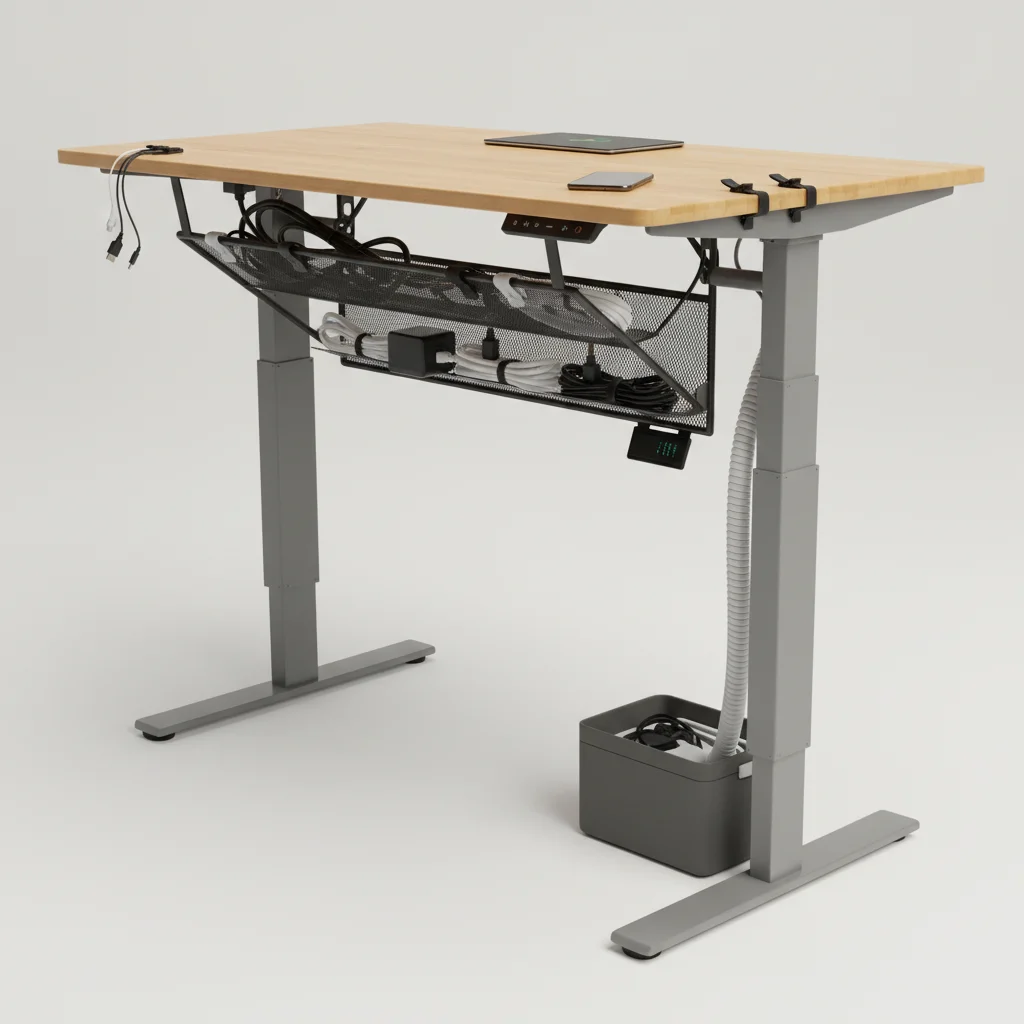
Effective standing desk cable management is crucial for a clean, safe, and productive workspace. A well-organized setup can significantly reduce clutter, prevent tripping hazards, and extend the life of your electronics. This guide will walk you through five essential strategies to tame the tangled mess of wires under and around your standing desk.
Why Cable Management Matters for Your Standing Desk
Beyond aesthetics, proper cable management offers several practical benefits. It protects your cables from damage, making them last longer and reducing the need for frequent replacements. It also simplifies troubleshooting, as you can easily identify and access specific cables when needed. Furthermore, a tidy workspace can improve focus and reduce stress, contributing to overall productivity.
Essential Tools for Effective Cable Management
Before you begin, gather the right tools. You’ll need a combination of items such as cable ties (reusable Velcro straps are highly recommended), cable sleeves or wraps, adhesive cable clips, and a power strip with surge protection. For a more integrated solution, consider a dedicated cable management tray that attaches directly to the underside of your desk. These trays are excellent for housing power bricks and excess cable length.
- Reusable Velcro Cable Ties: Flexible and easy to adjust.
- Cable Sleeves: Ideal for bundling multiple cables together.
- Adhesive Cable Clips: Perfect for routing individual cables along desk legs or edges.
- Under-Desk Cable Tray: A robust solution for larger bundles and power strips.
- Surge Protector Power Strip: Essential for protecting your electronics.
Step-by-Step Guide to Organizing Your Cables
|
Our Picks for the Best Standing Desk in 2026
As an Amazon Associate I earn from qualifying purchases.
|
||
| Num | Product | Action |
|---|---|---|
| 1 | ERGOMAKER Electric Standing Desk, 67" x 23.6" Height Adjustable Sit Stand Desk with Splice Board for Home Office, Computer Table Memory Preset (White Frame, White Desktop) |

|
| 2 | Small Height Adjustable Electric Standing Desk, 31.5" x 23.6" Sit Stand up Desk with Splice Board, Ergonomic Rising Computer Home Office Desk Table with Memory Preset, White Frame/White Top |
|
| 3 | ERGOMAKER 63" Electric Standing Desk, Adjustable Height, Sit Stand Up Desk for Home Office & Computer Workstations, Memory Controller, White |
|
| 4 | Kingant Standing Desk Height Adjustable Small Electric Stand Up Desks [35 x 20 Inch] - Ergonomic Sit Stand Desk Rising Desks for Home Office Computer Desk Stand Desk Workstation with Cable Management |
|
| 5 | HUANUO Electric Small Standing Desk, 35" x 20" Whole Piece Desktop, Adjustable Height Computer Desk, 4 Height Memory Settings, Sit Stand Up Desk for Home Office, White |
|
| 6 | HUANUO 32" Small Electric Standing Desk Adjustable Height, 4 Memory Height Settings, Sit Stand Up Desk for Home Office & Computer Workstation, LightWalnut |
|
| 7 | Huuger 55 x 28 Large Electric Standing Desk, Height Adjustable Computer Desk, 27.6" Deep Desktop, Stand up Gaming Office Table with 2 Hooks, 3 Preset Heights, for Home Office, Black |
|
| 8 | Adjustable Standing Desk with Cable Management, 48 X 24 Inches Electric Stand Up Desk, 176LBS Load, 2 Memory Preset Height Table for Home Office Work with Splice Board (Rustic Brown Desktop) |
|
| 9 | Standing Desk, Height Adjustable Electric Stand up Desk, 55 x 24 Inches Sit Stand Home Office Desk with Splice Board, Black Frame/Black Top |
|
| 10 | Marsail Glass Standing Desk with Drawer 37 x 22 Inches Stand up Desk Standing Desk Adjustable Height with One-Piece Tempered Glass Top, Ergonomic Home Office Desk with 4 Preset Heights White |
|
Start by unplugging all devices and removing existing cable ties. Group similar cables together, such as power cords, display cables, and USB cables. Begin routing cables from the furthest point to the power source. Use adhesive clips to secure cables along the underside of your desk and down the desk legs. For longer runs, employ cable sleeves to bundle multiple wires neatly. Ensure there’s enough slack for your desk to move between sitting and standing positions without pulling on the cables.
Consider using a dedicated cable management spine or channel for the vertical run from your desk to the floor. This not only looks cleaner but also protects cables from accidental damage.These spines are often designed to move with your desk, maintaining a consistent, organized appearance regardless of height.
Advanced Cable Management Solutions
For a truly minimalist setup, explore integrated solutions like monitor arms with built-in cable channels or desks with pre-drilled grommets. Wireless peripherals, such as keyboards and mice, can also significantly reduce the number of cables you need to manage. If you have many devices, a USB hub mounted under the desk can consolidate connections and minimize visible wires.Remember to periodically review your cable setup, especially if you add new devices, to maintain optimal organization.
Maintaining a Clutter-Free Workspace
Once your cables are organized, establish a routine to keep them that way. Avoid letting new cables accumulate without proper integration into your system. Labeling cables can also be a lifesaver, especially when you need to unplug a specific device. A well-managed cable system not only enhances the aesthetic of your standing desk but also contributes to a more efficient and enjoyable work environment.
Get our weekly buyer guide
Practical specs, not advice. Unsubscribe anytime.
