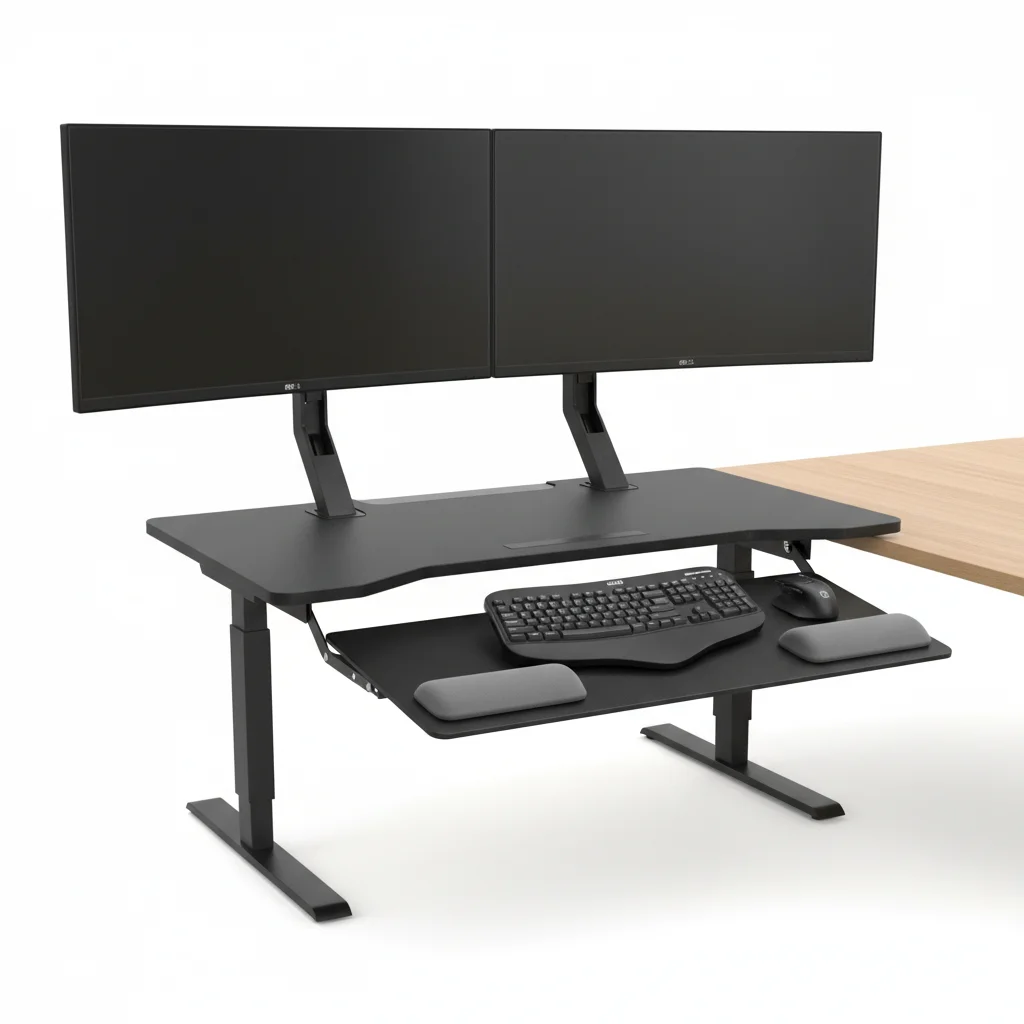
Standing desk converters can indeed be beneficial for your wrists, primarily by promoting a more neutral wrist posture and reducing the strain associated with prolonged typing and mouse use at a fixed desk. Many users report a significant reduction in wrist discomfort when transitioning to a standing setup, especially when combined with proper ergonomic accessories like an adjustable keyboard tray or an ergonomic mouse.
Understanding Wrist Strain at a Desk
Prolonged periods of typing and mousing with wrists bent upwards or downwards can lead to conditions like carpal tunnel syndrome or repetitive strain injury. A traditional desk often forces users into these awkward positions. The key to preventing such issues lies in maintaining a neutral wrist posture, where the wrist is straight and aligned with the forearm.
How Standing Desk Converters Help Wrist Posture
Standing desk converters allow you to adjust the height of your keyboard and mouse independently of your monitor. This flexibility is crucial for achieving optimal wrist alignment. By raising your work surface, you can ensure your elbows are at a 90-degree angle and your wrists remain flat, rather than extended or flexed. This ergonomic positioning minimizes pressure on the carpal tunnel and surrounding tendons.
Many converters also offer a separate keyboard tray that can be tilted, further enhancing wrist comfort. This tilt can help maintain a neutral wrist position, especially for those who type for extended periods.
Choosing the Right Converter for Wrist Health
|
Our Picks for the Best Standing Desk in 2026
As an Amazon Associate I earn from qualifying purchases.
|
||
| Num | Product | Action |
|---|---|---|
| 1 | Huuger 55 x 28 Large Electric Standing Desk, Height Adjustable Computer Desk, 27.6" Deep Desktop, Stand up Gaming Office Table with 2 Hooks, 3 Preset Heights, for Home Office, Black |

|
| 2 | Small Height Adjustable Electric Standing Desk, 31.5" x 23.6" Sit Stand up Desk with Splice Board, Ergonomic Rising Computer Home Office Desk Table with Memory Preset, White Frame/White Top |
|
| 3 | HUANUO 32" Small Electric Standing Desk Adjustable Height, 4 Memory Height Settings, Sit Stand Up Desk for Home Office & Computer Workstation, LightWalnut |
|
| 4 | Kingant Standing Desk Height Adjustable Small Electric Stand Up Desks [35 x 20 Inch] - Ergonomic Sit Stand Desk Rising Desks for Home Office Computer Desk Stand Desk Workstation with Cable Management |
|
| 5 | HUANUO Electric Small Standing Desk, 35" x 20" Whole Piece Desktop, Adjustable Height Computer Desk, 4 Height Memory Settings, Sit Stand Up Desk for Home Office, White |
|
| 6 | Standing Desk, Height Adjustable Electric Stand up Desk, 55 x 24 Inches Sit Stand Home Office Desk with Splice Board, Black Frame/Black Top |
|
| 7 | ERGOMAKER Electric Standing Desk, 67" x 23.6" Height Adjustable Sit Stand Desk with Splice Board for Home Office, Computer Table Memory Preset (White Frame, White Desktop) |
|
| 8 | Adjustable Standing Desk with Cable Management, 48 X 24 Inches Electric Stand Up Desk, 176LBS Load, 2 Memory Preset Height Table for Home Office Work with Splice Board (Rustic Brown Desktop) |
|
| 9 | ERGOMAKER 63" Electric Standing Desk, Adjustable Height, Sit Stand Up Desk for Home Office & Computer Workstations, Memory Controller, White |
|
| 10 | Marsail Glass Standing Desk with Drawer 37 x 22 Inches Stand up Desk Standing Desk Adjustable Height with One-Piece Tempered Glass Top, Ergonomic Home Office Desk with 4 Preset Heights White |
|
When selecting a standing desk converter with wrist health in mind, look for models that offer independent height adjustment for the keyboard and monitor. A spacious keyboard tray is also important to allow for natural hand placement. Consider models with a slight negative tilt option for the keyboard, as this can further reduce wrist extension.
- Independent keyboard and monitor height adjustment.
- Spacious keyboard tray for natural hand positioning.
- Option for negative keyboard tilt.
- Stable platform to prevent wobbling during use.
- Smooth and easy height adjustment mechanism.
Integrating Ergonomic Accessories for Maximum Benefit
While a standing desk converter is a great start, integrating other ergonomic accessories can further enhance wrist health. An ergonomic keyboard and mouse designed to promote a neutral wrist posture are highly recommended. Additionally, a wrist rest, when used correctly, can provide support and prevent your wrists from bending too much. Remember, the goal is to support the palm of your hand, not the wrist itself, to avoid putting pressure on the carpal tunnel.
Transitioning to a Standing Setup for Wrist Comfort
When you first start using a standing desk converter, it’s important to transition gradually. Begin with short periods of standing and gradually increase the duration. Pay close attention to your body and adjust the converter’s height as needed to maintain optimal wrist and arm posture. Regular breaks and stretching exercises for your wrists and hands can also significantly contribute to overall comfort and prevent strain.
Get our weekly buyer guide
Practical specs, not advice. Unsubscribe anytime.
